In potato processing, everything comes down to yield, consistent product quality and high processing speed. Potatoes are a natural product with considerable variation in shape, size and colour, which makes reliable sorting and grading genuinely complex. For any modern food processing operation, accurate product classification is therefore as important as raw production capacity.


The OptiServe optical sorting machine for potato products is not a basic colour sorter, but an advanced machine vision and product classification system developed specifically for the challenges of industrial food processing. Every potato is assessed on a range of product characteristics, and the system uses that information to make intelligent sorting decisions – even at high tonnages and in continuous production.
The result: more yield per tonne of raw potatoes, stronger quality control, lower false reject and a more stable, more sustainable production process.
OptiServe has developed this optical sorting machine for companies in food processing that work with potatoes on an industrial scale, including:

Every day, potato processors face challenges in quality control, product inspection and food safety that directly impact yield and operational performance.
potatoes vary widely in shape, length, size and colour. Traditional sorting machines cannot handle this variation at an industrial scale.
many quality issues sit inside the product – rot, internal discolouration and bruising. Early defect detection and product inspection are essential to prevent product loss further down the processing line.
different end-products come with different quality factors. “Sugar ends” cause dark french fries, acrylamide risk in chips is driven by discolouration, and french fry length distribution must stay consistent batch after batch.
potato streams can contain unwanted materials such as stones, glass and metal. Reliable foreign material detection and contamination detection is essential for food safety.
the potato industry runs very high tonnages per hour at relatively low margins. Every percentage point of extra production efficiency has a major impact on the bottom line.
processors want to reduce energy use, lower compressed air consumption and cut CO₂ impact per tonne of product. Sustainability is now a core KPI, not a bonus.
The OptiServe optical sorting machine can be deployed across a range of product streams within industrial potato processing:
Because potatoes show natural variation, sorting on a single parameter is not enough. Our machine vision platform uses intelligent product classification through multi-dimensional object recognition: several product characteristics are analysed simultaneously – colour, length, shape, and the combined analysis of colour, shape and length. For french fry production, length-based grading is critical to guarantee a consistent fry distribution. This combined analysis enables the inspection system to make complex quality decisions that traditional colour sorting machines simply cannot handle.
The optical sorting machine operates at belt speeds of up to 5.2 m/s. This delivers clear advantages for industrial food processing: processing of high tonnages per hour, support for continuous production, and no bottleneck in the processing line. Even at high speed, defect detection and product inspection remain accurate, so product quality and manufacturing efficiency go hand in hand.
Once a defect is detected, off-spec product is removed using an advanced pneumatic ejection system. It has been engineered specifically for fragile potato products such as french fries and cut potatoes. Benefits include minimal product damage, precise ejection, less collateral ejection of good product, and lower false reject. In addition, the system can consume up to 50% less compressed air, directly reducing operational costs and supporting sustainability targets.
Potato processing is energy-intensive by nature due to processes such as frying, freezing and drying. Energy efficiency matters at every step. Our optical sorting technology helps processors lower energy consumption per tonne of product, reduce operational costs, improve overall productivity, and achieve more sustainable food processing with a lower CO₂ impact per tonne of product.
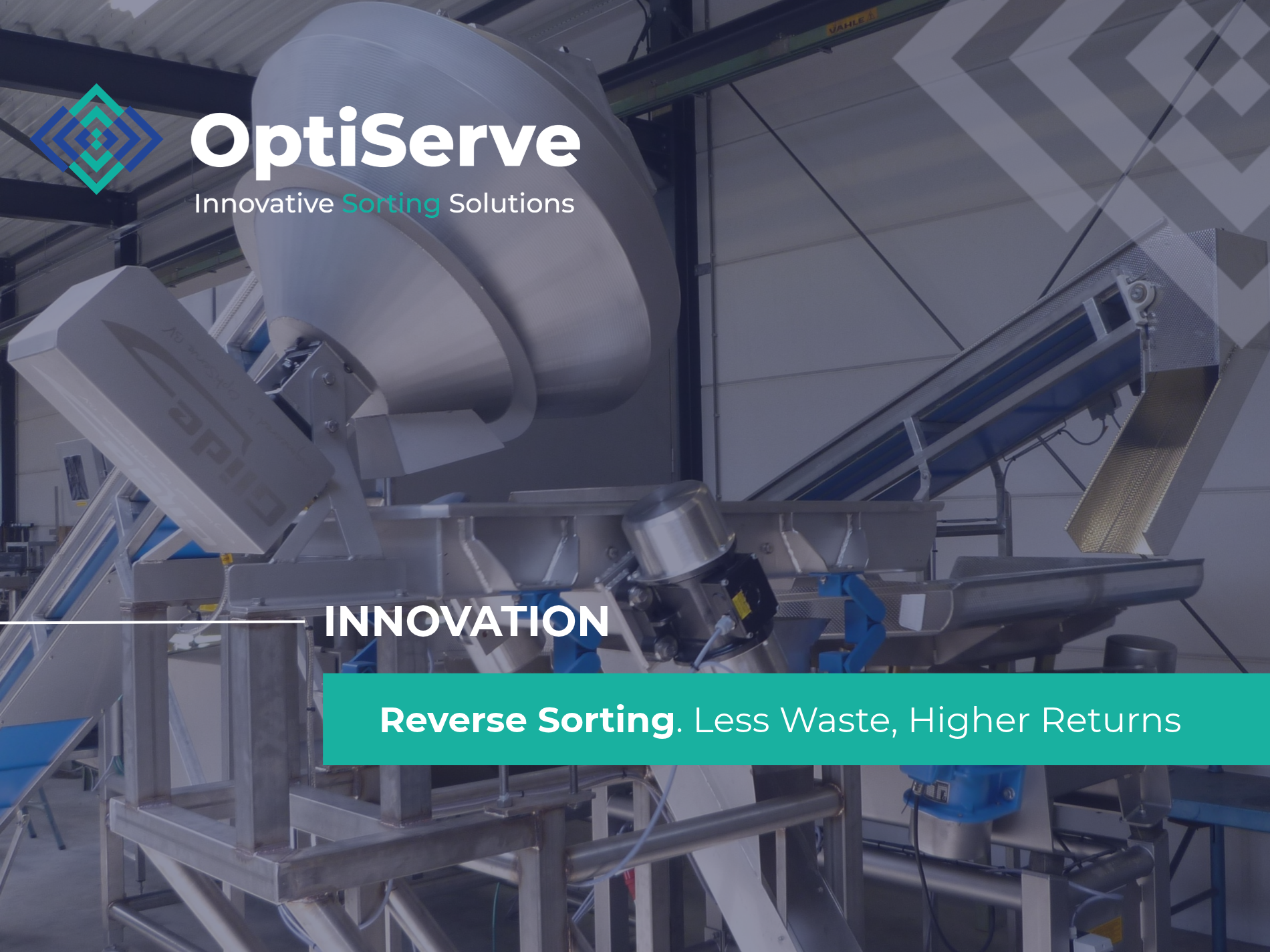
Different product streams call for different sorting strategies. The system supports multiple configurations for different quality streams and grading classes: 2-way sorting (good product / reject), 3-way sorting (length class / good product / reject) and reverse sorting (separating good products from the reject stream). This means the sorting machine can be deployed flexibly across different processing lines and quality programmes.
Alongside sorting, the inspection system collects valuable process data. This data drives continuous process optimization and fits seamlessly into modern industrial automation environments – providing insight into french fry length distribution, reject rate per batch, detection patterns per potato variety and seasonal influences on product quality. These data-driven insights form the foundation for continuous improvement of the production process.
Through intelligent product classification, high processing speed, accurate product inspection and efficient ejection, our optical sorting technology helps potato processors to:
In this way, optical sorting and grading become a strategic component of modern, efficient and sustainable potato processing.
Leave your details and we will send you the requested information very quickly. Do you have an urgent question? Call us at +31 (0)495 588 510